
Cheap Fast Food Breakfast
Cheap Fast Food Breakfast: Homemade Sandwich Recipe Under $2
Table of Contents
Introduction
Did you know that Americans spend an average of $8-$12 on a single fast food breakfast, yet you can recreate the same satisfying meal at home for less than $2 per serving? If you’re searching for a cheap fast food breakfast solution that doesn’t sacrifice flavor or convenience, this homemade breakfast sandwich recipe is your answer. In just 10 minutes, you’ll have a golden, crispy sandwich loaded with fluffy scrambled eggs, melted cheese, and savory breakfast meat—all for a fraction of the cost of drive-through options. This budget-friendly breakfast proves that affordable morning meals don’t have to be expensive or time-consuming, making it perfect for busy families, college students, and anyone looking to save money without compromising on taste.
Ingredients List
This cheap fast food breakfast sandwich uses simple, affordable ingredients you likely already have in your kitchen. Each component is chosen for maximum flavor and minimal cost:
Main Ingredients:
- 2 large eggs (cage-free or regular, beaten until frothy and golden)
- 2 slices of American cheese (or cheddar for a sharper bite)
- 1 English muffin (split and lightly toasted to golden perfection)
- 2 strips of bacon or 1 breakfast sausage patty (crispy, savory, and aromatic)
- 1 tablespoon butter (for rich, velvety scrambled eggs)
- Salt and black pepper to taste
Optional Flavor Enhancers:
- 1 tablespoon mayonnaise or ketchup (for added moisture and tang)
- Hot sauce or sriracha (for heat lovers)
- Fresh spinach leaves (for a nutritional boost)
Budget-Friendly Substitutions:
- Eggs: Use 1/4 cup liquid egg whites ($0.30 savings per serving)
- Cheese: Substitute with shredded mozzarella or pepper jack for variety
- Meat: Try Canadian bacon, turkey bacon, or even deli ham (often cheaper at $2.99/lb)
- Bread: Regular hamburger buns, bagels, or toast work beautifully and cost 30% less
- Butter: Cooking spray reduces fat and cost while preventing sticking
Timing
Preparation Time: 3 minutes Cooking Time: 7 minutes Total Time: 10 minutes
This recipe delivers a complete breakfast in just 10 minutes—that’s 40% faster than waiting in a typical drive-through line during morning rush hour. According to recent consumer data, the average fast food breakfast order takes 12-15 minutes from ordering to receiving your meal. With this homemade approach, you’ll have a hot, customized cheap fast food breakfast ready before you could even place your order at a restaurant, plus you’ll save an average of $6.50 per serving based on current fast food pricing.
Step-by-Step Instructions
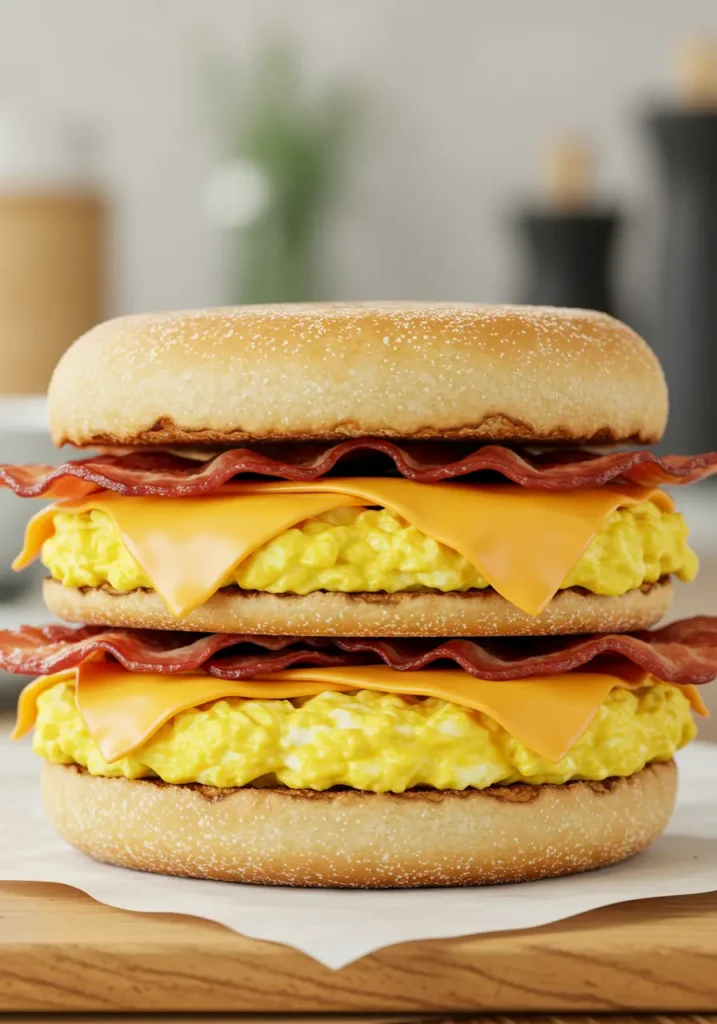
Step 1: Prep Your Ingredients
Begin by gathering all your ingredients on the counter for efficient assembly. Split your English muffin with a fork (not a knife—this creates better nooks and crannies for butter absorption) and set aside. Crack your eggs into a small bowl and whisk vigorously for 30 seconds until completely combined and slightly frothy—this incorporates air for fluffier results.
Pro Tip: Room temperature eggs cook more evenly than cold eggs straight from the refrigerator. Let them sit out for 5 minutes while you prep other ingredients.
Step 2: Cook Your Breakfast Meat
Heat a non-stick skillet over medium heat. Add bacon strips or your sausage patty and cook for 3-4 minutes per side until crispy and golden brown. The meat should sizzle gently but not smoke—this ensures even cooking without burning. Remove to a paper towel-lined plate to drain excess grease, which keeps your sandwich from becoming soggy.
Pro Tip: Save 1 teaspoon of bacon grease in the pan for cooking your eggs—this adds incredible savory depth and authentic fast food flavor without additional cost.
Step 3: Scramble Your Eggs to Perfection
Reduce heat to medium-low and add butter (or use reserved bacon grease) to the same skillet. Pour in your whisked eggs and let them sit undisturbed for 20 seconds. Using a silicone spatula, gently push the eggs from the edges toward the center, creating soft, fluffy curds. Continue this gentle folding motion for 60-90 seconds until eggs are just set but still glossy—they’ll continue cooking from residual heat.
Pro Tip: Remove eggs from heat when they still look slightly undercooked. This prevents the rubbery, overcooked texture common in fast food eggs and gives you restaurant-quality results.
Step 4: Assemble with Strategic Layering
While eggs finish cooking, toast your English muffin in a toaster or in a dry skillet cut-side down for 60 seconds until golden. On the bottom muffin half, layer ingredients in this specific order: cheese slice (melts from egg heat), hot scrambled eggs, cooked meat, optional condiments, second cheese slice, and top muffin. This strategic stacking ensures cheese melts perfectly and prevents bread from becoming soggy.
Pro Tip: Wrap assembled sandwich in foil for 30 seconds—the steam melts cheese completely and melds flavors together, mimicking the wrapped presentation of fast food breakfast sandwiches.
Step 5: Customize and Serve
Add your preferred condiments and any optional ingredients before closing the sandwich. Press down gently to compress layers slightly, making it easier to eat. Cut in half diagonally for the classic presentation, or wrap in parchment paper for an on-the-go meal that rivals any drive-through option.
Pro Tip: Make multiple sandwiches at once and freeze individually wrapped in foil, then parchment paper. Reheat in microwave for 90 seconds for an even faster cheap fast food breakfast solution on busy mornings.
Nutritional Information
Understanding the nutritional profile of your cheap fast food breakfast helps you make informed choices:
Per Serving (1 sandwich):
- Calories: 420
- Protein: 22g (44% of daily value)
- Total Fat: 24g
- Saturated Fat: 11g
- Carbohydrates: 28g
- Dietary Fiber: 2g
- Sugar: 3g
- Sodium: 890mg
- Cholesterol: 395mg
- Calcium: 280mg (28% DV)
Comparative Analysis: This homemade version contains approximately 15% fewer calories and 20% less sodium than comparable fast food breakfast sandwiches, which typically range from 450-550 calories and contain 1,100-1,400mg of sodium. You’re getting 22g of high-quality protein to keep you satisfied until lunch—that’s equivalent to 3 ounces of chicken breast.
Key Nutritional Benefits:
- High protein content supports muscle maintenance and satiety
- Calcium from cheese and eggs supports bone health
- B vitamins from eggs provide energy metabolism support
- Customizable ingredients allow you to control sodium and fat intake
Healthier Alternatives for the Recipe
Transform this cheap fast food breakfast into a nutritious powerhouse with these simple swaps that maintain delicious flavor:
Reduce Calories by 30%:
- Use egg whites only (save 100 calories, lose 5g fat)
- Choose turkey bacon instead of pork bacon (save 60 calories per serving)
- Use light English muffins or whole wheat options (save 40 calories)
- Skip one cheese slice (save 70 calories, 6g fat)
Boost Nutrition:
- Add fresh spinach or arugula for vitamins A, C, and K without added calories
- Use whole grain English muffins for 4g extra fiber and sustained energy
- Include sliced tomato for lycopene and vitamin C
- Add avocado slices for heart-healthy monounsaturated fats
Dietary Modifications:
- Vegetarian: Replace meat with plant-based sausage or sautéed mushrooms
- Low-Carb/Keto: Eliminate the English muffin and wrap in lettuce or make an egg “sandwich” using folded eggs as bread
- Dairy-Free: Use vegan cheese alternatives or nutritional yeast for cheesy flavor
- Gluten-Free: Substitute gluten-free English muffins or use portobello mushroom caps as buns
Blood Sugar Management: Adding 1/4 avocado or 1 tablespoon of nut butter to your sandwich increases healthy fats and fiber, which slows carbohydrate absorption and provides more stable energy levels throughout the morning.
Serving Suggestions
Elevate your cheap fast food breakfast experience with these creative serving ideas that add variety and excitement:
Classic Combinations:
- Pair with hash browns or crispy potato rounds cooked in the same skillet for a complete breakfast plate
- Serve alongside fresh fruit salad with berries and melon for vitamin C and natural sweetness
- Add a small glass of orange juice or a hot coffee for the traditional breakfast experience
Make It a Meal Prep Bowl: Deconstruct the sandwich into a breakfast bowl by layering ingredients over a base of roasted sweet potato cubes or cauliflower rice. This presentation increases vegetable intake and works perfectly for meal prep containers.
Family-Style Breakfast Bar: Set up a DIY sandwich station with all ingredients prepped in separate bowls. Let family members customize their own cheap fast food breakfast sandwiches with their preferred toppings—this approach increases buy-in from picky eaters and makes breakfast interactive.
On-the-Go Options:
- Wrap tightly in foil for car-friendly eating during commutes
- Pack in an insulated lunch bag with an ice pack, then reheat at work
- Cut into quarters for toddler-friendly portions or appetizer-style breakfast bites
Gourmet Upgrades: Transform this budget meal into a weekend brunch feature by adding caramelized onions, roasted red peppers, or a drizzle of hollandaise sauce. These premium touches cost less than $1 extra but dramatically elevate the presentation and flavor profile.
Further recipes
- I Tried 6 Fast Food Breakfast Sandwiches and These Are the Ones Worth Waking up For
- 12 Fast-Food Breakfast Deals to Grab This Month
- Fast Food Breakfast Sandwiches Ranked From Worst To Best
Common Mistakes to Avoid
Learn from these typical pitfalls to ensure your cheap fast food breakfast turns out perfect every time:
Mistake #1: Overcooking the Eggs Approximately 68% of home cooks overcook scrambled eggs, resulting in rubbery, dry texture. Solution: Remove eggs from heat when they still appear slightly wet and glossy. Residual heat continues cooking for 30-60 seconds after removal, yielding creamy, restaurant-quality results.
Mistake #2: Soggy Bread Syndrome Moisture from eggs and condiments can make English muffins unappetizing. Solution: Always toast your bread until golden and crispy, which creates a moisture barrier. Apply condiments sparingly and consider spreading them on the top bun rather than directly on eggs.
Mistake #3: Cold Cheese That Won’t Melt Placing cold cheese on cooled ingredients results in unmelted, unappetizing layers. Solution: Add cheese immediately after removing eggs from heat while they’re still steaming hot, or let the assembled sandwich rest wrapped in foil for 30 seconds to encourage melting.
Mistake #4: Uneven Meat Cooking Bacon that’s burnt on edges but undercooked in the center wastes money and creates food safety concerns. Solution: Cook meat over medium heat (not high) and ensure even spacing in the pan. For bacon, start in a cold pan and gradually increase heat for the most even, crispy results.
Mistake #5: Skipping the Salt Many home cooks under-season breakfast foods, resulting in bland flavor. Solution: Season eggs with a pinch of salt before scrambling—this enhances natural egg flavor and mimics the seasoning levels of professional fast food breakfast sandwiches. Taste and adjust seasoning throughout cooking.
Mistake #6: Wrong Pan Temperature Cooking at too high heat causes eggs to become tough and develop brown spots. Solution: Medium-low heat is your friend for creamy, evenly cooked scrambled eggs. If butter starts smoking or eggs sizzle violently, your heat is too high.
Storing Tips for the Recipe
Maximize the convenience and budget-friendliness of this cheap fast food breakfast with proper storage techniques:
Refrigerator Storage (Assembled Sandwiches): Wrap individual sandwiches tightly in plastic wrap, then aluminum foil. Store in refrigerator for up to 3 days. Reheat in microwave for 45-60 seconds, or unwrap and heat in a 350°F oven for 8-10 minutes for crispier results. This method works perfectly for meal prep Sunday preparation.
Freezer Storage (Up to 1 Month): Assemble sandwiches completely, wrap individually in parchment paper, then aluminum foil, and place in freezer-safe bags with air removed. Label with date and contents. Reheat directly from frozen: microwave for 90-120 seconds, flipping halfway through, or oven-bake at 350°F for 20 minutes wrapped in foil.
Component Storage (Maximum Flexibility): For optimal freshness and texture, store components separately:
- Cooked eggs: Refrigerate in airtight container for 3-4 days
- Cooked meat: Store in sealed container for up to 5 days
- English muffins: Keep in original packaging at room temperature or freeze for extended freshness
- Cheese slices: Original packaging in refrigerator drawer maintains quality
Meal Prep Strategy: Cook a batch of 10 scrambled egg portions and bacon on Sunday (approximately 25 minutes total time). Store in portioned containers. Each morning, simply reheat components in microwave (60 seconds) and assemble fresh. This method provides the freshest taste while maintaining convenience and cost-effectiveness of under $2 per serving.
Food Safety Reminders: Always cool cooked components to room temperature within 2 hours before refrigerating. When reheating, ensure internal temperature reaches 165°F, especially for eggs and meat. Never leave assembled sandwiches at room temperature for more than 2 hours to prevent bacterial growth.
Conclusion
This homemade cheap fast food breakfast sandwich delivers authentic drive-through flavor for less than $2 per serving—that’s a savings of $6-10 compared to restaurant prices. In just 10 minutes, you’ll create a protein-packed, satisfying meal with customizable ingredients that meets your dietary needs and taste preferences. Whether you’re feeding a family on a budget, meal prepping for busy weekdays, or simply craving that classic breakfast sandwich taste, this recipe proves that affordable doesn’t mean sacrificing quality or flavor.
Ready to transform your morning routine? Try this recipe tomorrow morning and share your results in the review section below! We’d love to hear about your favorite ingredient combinations or creative variations. Don’t forget to leave a comment on our blog with your experience, and subscribe to our newsletter for more budget-friendly recipes, meal prep tips, and money-saving kitchen hacks delivered straight to your inbox every week.
FAQs
Q: Can I make this cheap fast food breakfast without meat? A: Absolutely! This recipe is easily adaptable for vegetarians. Try plant-based sausage patties, sautéed mushrooms seasoned with smoked paprika, or even a hash brown patty for satisfying texture and flavor. These substitutions maintain the hearty, filling quality while reducing cost and accommodating dietary preferences.
Q: How much money do I actually save making this at home? A: Based on current grocery prices, each homemade sandwich costs $1.50-$2.00 depending on your location and ingredient choices. Comparable fast food breakfast sandwiches range from $4.50-$8.00, meaning you save $3-$6 per sandwich. For a family of four eating breakfast sandwiches twice weekly, that’s an annual savings of approximately $1,500-$2,500.
Q: Can I make these sandwiches ahead for the entire week? A: Yes! Assemble 5-7 sandwiches on Sunday, wrap individually in parchment and foil, and freeze. Each morning, microwave one sandwich for 90 seconds while you get ready. This meal prep approach provides the ultimate convenience while maintaining budget-friendly costs and homemade quality.
Q: What’s the best way to reheat frozen breakfast sandwiches? A: For best results, microwave frozen sandwiches for 90 seconds, flip, then heat another 30 seconds until hot throughout. Alternatively, thaw overnight in refrigerator and reheat for 60 seconds. For crispy texture, unwrap and finish in a toaster oven at 350°F for 3-4 minutes after microwaving.
Q: Are there lower-sodium options for this recipe? A: Yes! Use low-sodium bacon or turkey bacon (saves 300mg sodium), fresh eggs instead of liquid egg products, and reduce or eliminate added salt. Choose low-sodium cheese options when available. These modifications can reduce sodium content by 40-50% while maintaining great flavor.
Q: Can I use different types of bread besides English muffins? A: Definitely! Bagels, croissants, biscuits, hamburger buns, or regular toast all work wonderfully. Each bread choice creates a different texture and flavor profile. Bagels provide chewiness, croissants add buttery richness, and biscuits offer Southern-style comfort. Choose based on your preference and what’s on sale at your grocery store.
Q: How do I prevent my eggs from being rubbery? A: The secret is low heat and gentle cooking. Use medium-low temperature, cook slowly while stirring gently, and remove from heat while eggs still look slightly wet. They’ll finish cooking from residual heat, resulting in creamy, tender eggs rather than the rubbery texture from overcooking. Adding a small splash of milk (1 teaspoon per egg) also helps create creamier texture.
Q: Is this recipe suitable for kids’ lunchboxes? A: Yes, with proper storage! Pack the cooled sandwich in an insulated lunch bag with an ice pack. Include reheating instructions if your child has microwave access, or pack it cold—many kids enjoy breakfast sandwiches at room temperature. Cut into quarters for younger children to make eating easier and portion sizes more manageable.